Author Archives: c4tuna

The Digital Writing Process

One of my earliest and richest professional development activities was with the National Writing Project.  As a newly certified English teacher, the NWP’s process approach to writing seemed a whirlwind:  how could I help my students to see the possibilities within all the stages of pre-writing, organizing, drafting, and revision?  Slowly, I came to understand the process approach to writing and became a particular fan of Donald Murray, who made visible the struggles of writers and the joy of discovery through the written word.

Now, with nearly 20 years of middle and high school teaching behind me, I still respect the writing process approach and its benefits.  I also recognize that the nature of writing has changed tremendously over those two decades due to the significant influence of digital tools and sources.  Of course, today’s composers still must meet the commonly accepted conventions of the genre in which they are engaged, but our visual digital culture creates different demands than did the primarily print text-based world.

Digital environments mediate the navigation, length, and complexity of texts, requiring composers to adapt to audience, tone, and purpose in ways that previous generations were never required. Digital environments have disrupted the writing process as we once knew it due to an interwoven combination of traditional narrative sequencing, hyperlinks to other digital sources, infusions of multimedia texts like videos and podcasts, and interactive response fields.

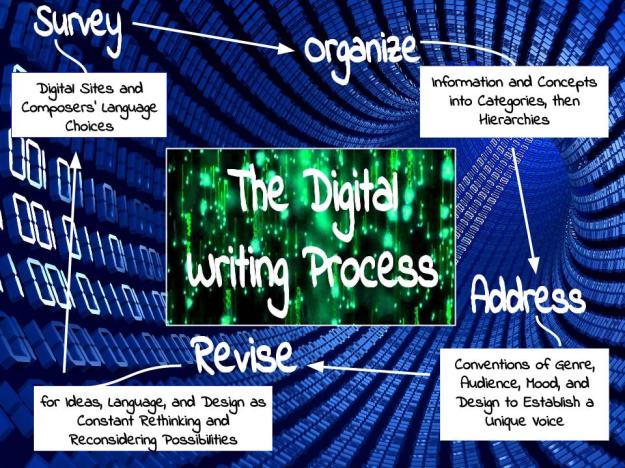
A new Digital Writing Process SOARS!
Source: Carolyn Fortuna

Source: Carolyn Fortuna

  •  Survey: Have students surf the web and a large body of texts as a way of frontloading concepts and language. One way to ensure that students’ research meets your institution’s guidelines for social appropriateness and keen content connections is to curate a collection of digital models through which students can surf. (Here’s a sample curation from a sports and popular culture course I teach.)  A curation helps to illuminate what works among digital design, multimedia choices, and narrative structure.  And, so they learn to embed a pattern of attribution, it’s probably best for students to grab short phrases of direct excerpts from the sources they find, using quotation marks.  Otherwise, students might find themselves part of a plagiarism controversy.
  • Organize: Students need to sort through the chaos of all the fabulous texts and direct excerpts they’ve gathered from the web. Have students group their direct excerpts according to commonalities, and then have them narrow those commonalities into hierarchies. Students will also benefit from exposure to different methods to code evidence, such as color coordinating, charting, doing in-document keyword searches, or categorizing. Eventually, move students from an integration of patterns into a systematic, theoretically embedded explanation.
  • Address: One of the truly marvelous benefits of surfing the web is the capacity to see how other composers design their ideas and formats.  Commonly called conventions of the genre, these expected ways of adhering to a particular type of compositional style take a bit of scrutiny.  Have students analyze a variety of texts within a particular genre and identify certain predictable characteristics.  As students move into drafting their own compositions, they should practice different approaches to establishing mood and tone through deliberate word choices.  And, because their digital design should be visually appealing to appeal to a targeted audience, they should recognize and incorporate pointed design techniques, a clear message, and a professional look. 
  • Revise: Believe it or not, the revision stage of the digital writing process is the most time-consuming.  That’s because a first full draft of a composition, in all likelihood, lacks depth of ideas, language cohesion, and/or an interrelated design structure.  Moreover, when one aspect of the digital composition is changed, the other areas are immediately affected.  Guide students through a series of directed steps to consider how each part of the digital design process interacts with others.  Provide opportunities for 1-to-1 teacher: student conferencing, small group collaboration, and focus group feedback so that students have a balance of ample creative time and constructive responses.
  • Survey again:  Often, a full and revised draft of a composition still isn’t polished enough. That’s why the digital writing process requires composers to return to the web and to continue to survey mentor models of published digital compositions.  This final step is often lacking in classrooms, although new digital technologies and pedagogical tools have emerged to help teachers in the teaching of revision.  Students need to revisit the digital sources that originally inspired them, study them with a newly formed composer’s point of view, and decide what additional strategies they can adopt to infuse more nuance, voice, and authenticity to their own original compositions.

Many teachers now incorporate multimodal texts into their instruction as ways of making meaning. Because digital realms mediate content and meaning, curricula must also change to address new possible digital composing pathways.  Teachers in a PEW Research Center study report that their students have a broad audience for written material due to pervasive social media production opportunities. It’s time for teachers and cultural workers across disciplines to embrace a new Digital Writing Process as a necessary way to help guide our students to their highest levels of digital compositional excellence.

Carolyn Fortuna, Ph.D. is the recipient of the International Literacy Association’s 2015 Grand Prize Award for Technology and Reading.  She teaches high school English and is an adjunct faculty member at Rhode Island College. If you’d like information for your school or non-profit organization about workshops in digital and media literacy and learning, contact Carolyn at c4tuna31@gmail.com.

Get to the Point: Using Digital Sources to Learn to Write Succinctly

Why is it so important to write clearly and concisely?  When you choose your words deliberately, manage each paragraph strategically, and orient your writing to a particular purpose, you make the greatest impact.  Let’s look at many different digital sources to help us understand why concise writing is best way to meet goals as a writer.

  • You can tell a whole story with very few words when you use compressed language.  A paragraph of compressed language may, actually, accomplish more than an entire 5-paragraph narrative. Check out these 10 Techniques for More Precise Language to help you develop strategies for writing with compressed language.

    Image credit: Ragan Public Relations

  • Succinct prose is like poetry: every phrase carried with it a visual image.  These images connect your reader to your ideas and experiences. Here is an article from a self-published author with suggestions how to adapt the conventions of poetry to prose.
  • When you write succinctly, you can accomplish several purposes instead of just one purpose.  Honestly, when we write for only one purpose, we often end us using lots of filler words and terms. Here is an overview of the four writing modes to give you an idea of how you can accomplish a lot with multiple purposes in mind.
  • Since many readers have short attention spans, you keep your readers’ attentions with compressed language.  Otherwise, your readers probably won’t finish reading your narrative.

    Image credit: reDESIGN

  • Your reader comes to understand your main point in a limited amount of time. That’s important when you want to capture and hold the reader’s attention.  Here are Five Features of Effective Writing to help you reach your reader.
  • In the age of soundbites, your audience expects succinct messaging. Read Keeping the Purple Out of Your Prose for ideas.
  • You say the most with the least amount of words. Here are 15 Ways to Write Tight to help you get to the point quickly and well.
  • You are able to make multiple points when you write succinctly; thus, you support your argument well. If you’d like to investigate ways to use evidence to support your main idea, read The Language of an Argument for many examples.
  • Compressed language is efficient, descriptive, and sophisticated.  Writers who compose with compressed language demonstrate expertise about a topic. How to Write a Sophisticated, Dynamic Scholarly Article has lots of very sophisticated suggestions!
  • Image credit: Xlibris Publishing

    Compressed language is a signifier of authenticity.  When your language is compressed, you are able to persuade others through a series of embedded meanings and messages. This blog post from the Huffington Post offers writers lots of methods to infuse your own original voice into your writing.

Yes, concise writing takes time for revision. But the power of your final product will be worth it.

Carolyn Fortuna, Ph.D. is the recipient of the International Literacy Association’s 2015 Grand Prize Award for Technology and Reading.  She teaches high school English and is an adjunct faculty member at Rhode Island College. If you’d like information for your school or non-profit organization about workshops in digital and media literacy and learning, contact Carolyn at c4tuna31@gmail.com.

URI Education Professors, Graduate Win Education Awards from International Literacy Association

Media Contact: Elizabeth Rau, 401-874-2116UR

KINGSTON, R.I. – Aug. 5, 2015 – Two University of Rhode Island education professors and a URI graduate have won international awards for their accomplishments in literacy.

The awards were given by the International Literary Association at its annual conference in St. Louis July 19.

“It’s a special honor for me to be recognized by my peers,’’ says Julie Coiro, a URI associate professor of education who won the Computers in Reading Research Award. “I’m thrilled to be able to contribute to the growing body of work on how to best support teachers and students learning how to read, write and think more deeply with new technologies.”

Coiro’s award honors reading researchers who have made a significant contribution to research about classroom literacy instruction and technology integration.

Coiro, of Quaker Hill, Conn., teaches courses in reading and digital literacy and is an expert in the field of new literacies, which seeks to understand and develop literacy in a digital age.

She has lectured from Taipei, Taiwan and Manitoba, Canada to Brisbane, Australia and Mendillon, Colombia about her research on the new literacies of the Internet, online reading comprehension and practices for technology integration and professional development.

She recently completed a five-year research project funded by the U.S. Department of Education to develop assessments to measure online reading comprehension to support classroom instruction.

Coiro also co-directs the Graduate Certificate in Digital Literacy at URI, a graduate program that allows educators, librarians and media professionals to learn how to use digital media to create learning opportunities for students. Under her leadership, educators and media experts from throughout the world attended the Summer Institute in Digital Literacy at URI’s Feinstein Providence Campus, also in July.

“It’s a thrill to get so many different types of educators revved up about literacy and learning with technology,’’ Coiro says. “Then you watch them go back to their districts and do incredible things.”

Coiro is co-editor of The Handbook of Research On New Literacies and has co-authored a book for classroom teachers, New Literacies for New Times: Teaching with the Internet K-12.

In 2011, she won the Early Career Achievement Award from the Literacy Research Association. The following year, she received URI’s Early Career Faculty Research Excellence Award in the Social Sciences, Arts and Humanities.

And in 2014, she received an Elva Knight Research Award – with her colleague Carita Kiili of Jyväskylä, Finland – to study how to support high school students as they critically read and write online texts involving controversial issues.

Theresa A. Deeney received the Jerry Johns Outstanding Teacher Educator Award for outstanding college or university teacher of reading methods or reading-related courses.

Deeney, of South Kingstown, is an associate professor of literacy education at URI, coordinator of the graduate literacy program and director of graduate studies in the School of Education.

Her research focuses on pre- and in-service teacher education in literacy and assessment and instructional practices for students who struggle. Her work has appeared in The Reading Teacher, Journal of Special Education and Intervention in School and Clinic, Yearbook of the Literacy Research Association.

“Being recognized by my peers for my work in literacy teacher education is an honor,’’ she says, of her award. “I’m so grateful to all of the wonderful teachers I’ve had the pleasure to learn from over the years. They’re really the ones who deserve recognition.”

As part of her work, Deeney directs URI’s After School Literacy Program, a yearlong program run in conjunction with the Graduate Reading Program. Under her guidance, URI students have helped more than 90 children and adolescents in local schools with reading and language difficulties.

Deeney is author of Improving Literacy Instruction with Classroom Research. In 2007, she received the Outstanding Outreach Award from URI’s College of Human Science and Services for her work with urban teachers, and in 2015, the Outstanding Service Award. She also received the 2014 Constance McCullough Award from the International Literacy Association for professional development in Kenya as part of her work with the Africa Teacher Foundation. For this project, she helps teachers in some of the poorest areas of Kenya learn instructional techniques for developing their students’ literacy skills.

“I am thrilled that Terry Deeney and Julie Coiro have been recognized internationally for their excellence in research and instruction in literacy,’’ says Lori E. Ciccomascolo, interim dean of the College of Human Science and Services and dean of URI’s Feinstein College of Continuing Education. “They clearly have had an impact in their field, and I thank them for setting such a high standard for how literacy is taught and researched.”

Another award went to Carolyn Fortuna, of Glocester, who won the International Literacy Association’s 2015 grand prize Technology and Reading Award. The award honors educators in grades K-12 who are making outstanding and innovative contributions to the use of technology in reading education.

Fortuna is a 2010 graduate of the joint doctoral program in education at URI and Rhode Island College. She attended URI’s Summer Institute in Digital Literacy in 2013 and frequently participates in URI’s Media Education Lab research. She is the founder and director of IDigItMedia.com, which offers digital media literacy and learning professional development to schools and nonprofits.

She teaches high school English in Franklin, Mass., and is an adjunct faculty member at Rhode Island College.

Pictured above: Julie Coiro (top); Theresa Deeney (middle); and Carolyn Fortuna (bottom). Photos courtesy of URI.

Reprinted with permission of the University of Rhode Island.

International Literacy Association 2015 Grand Prize Award for Technology and Reading

Source: International Literacy Association

St. Louis, Missouri— August 5, 2015

Carolyn Fortuna, Ph.D., a high school English teacher in Franklin, Massachusetts, was awarded the International Reading Association’s Grand Prize Award for Technology and Reading at this year’s annual conference.  Fortuna designed a project titled, “Reading Meets a 1:1 Digital Environment in Senior High School English.”

Dr. Fortuna integrates critical digital literacy, which is examination of social and cultural issues in the Internet age, into structured reading activities. With a constant infusion of print, audio, digital, visual, and video modalities, her students read intertextually, research across cultures, and compose authentically through individualized, inquiry-based, and collaborative digital literacy learning.

The ILA Award for Technology and Reading honors educators in grades K–12 who are making an outstanding and innovative contribution to the use of technology in reading education. Recognized were two grand-prize winners, seven U.S. regional winners, one Canadian, and one international winner. All entrants must be educators who work directly with students ages 5–18 for all or part of the working day. carolyn receiving ILA award

A graduate of the Feinstein Joint Doctoral Program at URI and Rhode Island College, Dr. Fortuna and each of her students use Google websites to analyze and produce texts.  All their websites become filled with short and long fiction, primary source documents, art, Prezis, Quizlets, You Tubes, poetry, songs, film trailers, commercials, podcasts, and even cartoons.

She says, “I want to help students to read their worlds and to recognize their capacities as change agents.”  This means moving student engagement from recall to critical analysis, digital composition, transformation, and publication. In a unit, students might start with advertisement analysis and continue with digital workshop argumentation. A survey of non-fiction essays can morph into collaborative teaching, and  e-learning modules  might progress to a study of curated museums of texts.

Dr. Fortuna thinks that literacy is socially inclusive, can inspire civic participation, and has the capacity to develop lifelong learning. Her high school seniors build awareness of and forge connections to issues that are a microcosm of the larger society in which we live.

Source: Original artwork by Andy Childs

Source: Original artwork by Andy Childs

For more information, visit literacyworldwide.org. Media Contact: press@reading.org.

Carolyn Fortuna, Ph.D. is the recipient of the International Literacy Association’s 2015 Grand Prize Award for Technology and Reading.  She teaches high school English and is an adjunct faculty member at Rhode Island College. If you’d like information for your school or non-profit organization about workshops in digital and media literacy and learning, contact Carolyn at c4tuna31@gmail.com.

Why isn’t there more digital media literacy research?

I took a recent trip to Toronto for the Sport and Society international conference.  Intrigued by “the cultural, political, and economic relationships of sport to society” that this knowledge community embraces, I was ready to dive headfirst into a world of sport analysis.

And I did.  I learned about Australia’s new National Policy on Match Fixing in Sport, 2011, which attempts to eliminate match fixing in three ways: a) Player rules must be clear; b) rules must be enforced; c) educational programs must be implemented; d) there must be mechanisms so officials can come forward Toomey, University of Canterbury, New Zealand). I heard how Brazil is attempting to help its citizens to become less sedentary through a program called “Agita,” in which, if people determine that there is an active health risk, and they become “indignant about other methods of treatment, they will accept physical exercise as a viable alternative” (Matsudo, plenary speaker).  There was research about how “being able to identify those with high athletic identity can help to prepare (health workers)… to recognize and/ or treat mental health issues” (Bouchanine, Houston Baptist University). Each of these was fascinating and informative.

There were presentations that included references to media representations and language use. I heard how NFL domestic violence incidents have come to be filtered through a “rhetoric of praise and blame,” in which organizations “glorify certain values and push away others,” leaving the victim as “instigator” (Schneider and Tinkleby, Morningside College, Sioux City, USA). I even was part of a session in which the topic was the determination by the Canadian sport industry— clearly a branch of the media—- “whether medicinal marijuana fits with respect to sport sponsorship” (Mansour, University of Ottawa).

But what I didn’t hear was an interrogation of sport through digital media literacy research.  Sure, several worthwhile presenters included references to media influence.  But  I believe I was the only researcher who deepened the stakes to suggest a research methodology that would help today’s generation of youth to take critical distance from sports media messages.

What is “critical distance?” Individuals demonstrate the capacity for critical distance from topics and issues when they show evidence of measured thought, digest multiple possible interpretations, and demonstrate reason around dominant discourse.  Digital media literacy can help students to gain the tools to unpack and make sense of ubiquitous sport media messages.  The “digital” aspect occurs when individuals Incorporate a combination of digital composing (such as Prezi, Pinterst, Google Drawing, We Video). The “media” analysis involves identifying author, audience, implications, and different possible interpretations.  Together, digital media literacy equips student to gain structures that they hold onto well beyond one course or teacher’s influence.

So, why don’t more researchers embrace digital media literacy as methodology?  The most likely reason is difficulty of access.  It’s hard to locate and get permissions from minor students (and their families).  And there’s the difficulty of physical access—- you have to be with that particular population of students throughout the entire unit of study, which usually involves a rotating schedule of meeting times.  And, honestly, students who are immersed in a research study are a bit unreliable.  They’re frequently absent, or their attentions are divided among social, emotional, physical, psychological, and cognitive places.  Their enthusiastic responses and engagement one day may be dampened another day by elusive exterior influences.

For those of your researchers who are considering an attempt at digital media literacy pedagogy, I say, Go for It!  Student reactions to media texts are quite thought-provoking.  And, when they take the next step to produce their own media messages, you as a researcher will see the authentic social and cultural impacts that disciplines like sports are making on today’s youth. The results you’ll find will shift the academic discourse with the capacity to look at cultural reproduction of norms, social shifts in ideology, and the pathways to tomorrow’s sociocultural climate.

Your impact on research could be really powerful stuff.

Carolyn Fortuna, Ph.D. is the recipient of the International Literacy Association’s 2015 Grand Prize Award for Technology and Reading.  She teaches high school English and is an adjunct faculty member at Rhode Island College. If you’d like information for your school or non-profit organization about workshops in digital and media literacy and learning, contact Carolyn at c4tuna31@gmail.com.


RIC Adjunct Faculty Explore Student Engagement Alternatives

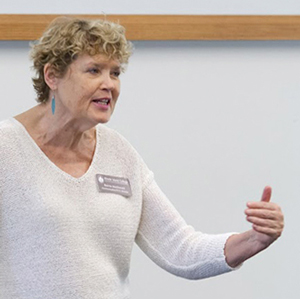
Adjunct faculty member Carolyn Fortuna attends FCTL’s Adjunct Professional Development Day 2015

Adjunct faculty member Carolyn Fortuna attends FCTL’s Adjunct Professional Development Day 2015

“Our students are changing, and we need to change with them,” said Vice President for Academic Affairs Ron Pitt in his welcome remarks at RIC’s annual Adjunct Professional Development Day on July 15.

Some 49 adjunct faculty members attended the Faculty Center for Teaching and Learning (FCTL) event, organized around the theme, “Alternatives to Lecture and Discussion.” Highlights from the six workshops included introducing collaborative learning concepts, incorporating autobiography in the classroom and using digital storytelling to help synthesize learning.

macdonald_300Bonnie MacDonald, FCTL’s director, shared with adjunct faculty members that the “really important thing [about the event] is the opportunity to talk with each other,” in order to find common ground and learn from each other. “We couldn’t manage without adjuncts,” said MacDonald, adding that RIC greatly values their commitment to teaching.

Marie F. Beardwood, an academic technologist for FCTL and adjunct faculty member in two departments on campus, led the workshop, “Strategies for the Successful Use of YouTube in Face-to-Face and Online Classes.” Since joining RIC in 2011, Beardwood has been instrumental in helping her peers change the way they teach classes.

Adjunct faculty member Carolyn Fortuna, who teaches gender studies, said that Beardwood’s trainings had helped her convert her face-to-face course into one that is now fully online. She said enrollment in her gender studies course, “Sex, Sport, and Society,” has since “increased exponentially.”

Concerning the topics discussed through this year’s workshops, Fortuna said, “I think we have to help [students] produce in the digital environment in which they are accustomed,” adding, “We’re helping them not only to learn the content but also to be able to use it in a real-world way.”

For Kathleen Siok, who teaches chemistry classes at RIC, technology is only part of the solution when it comes to the classroom. She said many of her students arrive with “a false vision of how quickly technology can help solve problems.”

The human element will always matter most, said Siok. For example, her students sometimes need to learn respect for each other and how to help one another. “They have to learn that you have to be able to examine, to think, to ask the right questions and to say ‘How good is this answer?’ and ‘How can I look further into this to make sure that I have a solid solution to this problem?’” she said. “[The answer] is not going to happen immediately like it does with cell phones.”

Adjunct faculty member Lawrence Wilson came away from the day inspired to engage his students through sharing their personal histories – and his own. Beginning a two-way dialogue, he said, is needed because “students are yearning to discover who they are.”

Beardwood said that, for her, student engagement in her classes is enhanced when she combines digital and human interactions. When she includes compelling YouTube videos into her online lessons, students do more work before the start of class, allowing her to “delve so much deeper” into the subject matter.

FCTL’s adjunct faculty program works very well, said MacDonald. “Adjuncts frequently feel disconnected from the larger community,” she added. In fact, she said RIC is one of the few schools in the region that hosts professional development and special events for adjunct faculty to “recognize how important they are to our mission.”

This story was originally published by Rhode Island College News. Reprinted with permission.

Offsetting the Fear of Digital Applications in the Classroom

While attending a recent summer workshop, I was surprised to become immersed in debate about the validity of digitally-based classrooms.  Isn’t that a topic for last century?  Hasn’t President Obama been pushing an agenda so that all schools are connected?

Yet a vocal opposition of teachers around me insisted that the digital world is only a passing trend, that it’s only young teachers who are equipped to incorporate digital tools and applications into literacy instruction.

I became a bit conscious of my gray roots and wrinkles as I responded. To me, digital literacy and learning should merge in every classroom, everyday, as authentic representations of the ways that today’s adolescents read their worlds. Digital tools offer advantages, sometimes called “affordances” (Boyd, 2010), through access to multiple modalities and participatory culture.

But I also understand how individuals who haven’t had a lot of exposure to technology in their personal lives or professional development might be hesitant, even afraid. A teacher who stands before a class of skeptical students is vulnerable.  We’re expected to know everything: Common Core content, multiple intelligences, classroom management strategies, formative assessment…. Whew!  Who has time for digital applications, anyways?

Actually, digital intersections can ease the complex demands of our teaching profession. Technology in the classroom can provide students with individualization, inquiry, and engagement that complement traditional — and proven— methods of literacy learning.  It does require taking academic risks, but the rewards can be invigorating.

Three Steps You Can Take to Gain Digital Proficiency

  • Find a trusted colleague. Learning how to navigate web applications is different than learning from a book.  Until you’ve been personally shown the series of steps to, say, set up a blog or transfer a link to a teacher website, the digital world seems daunting.  If you have a colleague whom you can trust with the raw truth that you really don’t know Instagram (or Moodle, Google Classroom, the difference among Internet Explorer/ Firefox/ Chrome: the list can be long), you’ve started on the path to digital proficiency. Set up mutually convenient times to meet and exchange ideas.  And, who knows?  Your colleague likely will inhale your content area expertise in a mutuality of collaboration.
  • Pilot your new digital lesson when the stakes are low. Once you’ve found your digital inroad, it’s time to go live. Figure out where you can embed it into a unit under way cleanly and with supporting activities. Do you have a class of tech-savvy, invested learners? They’d likely help out if something goes awry.
  • Breathe deeply, reflect, and rededicate. You’ve done it!  Your digitally-infused lesson was a roaring success, simply an adequate learning event, or mediocre at best. Whichever the case, it’s time to feel proud of what you attempted and accomplished.  But don’t stop there. 

Be curious about new digital resources, approaches to 21st century pedagogies, and opportunities for continual PD.  After all, your digital excursions can open up many new and exhilarating possibilities.

References

danah boyd. (2010). “Social Network Sites as Networked Publics: Affordances, Dynamics, and Implications.” In Networked Self: Identity, Community, and Culture on Social Network Sites (ed. Zizi Papacharissi), pp. 39-58.

Carolyn Fortuna, Ph.D. is the recipient of the International Literacy Association’s 2015 grand prize Award for Technology and Reading.  She teaches high school English in Franklin, MA and is an adjunct faculty member at Rhode Island College. If you’d like information for your school or non-profit organization about workshops in digital and media literacy and learning, contact Carolyn at c4tuna31@gmail.com.

It’s Time to Stop Underestimating the Power of Women’s Sports

On Sunday, July 5, the U.S. Women’s soccer team soundly defeated Japan 5-2 in the 2015 FIFA World Cup Finals, setting “the highest metered market rating ever for a soccer game in the U.S. on a single network,” according to Fox Sports.

The U.S. Women’s win also calls into question the constantly reproduced media message that few spectators actually care about women’s sports.

Why does that perception— that women’s sports aren’t worth watching — persist?  Perhaps it’s due in part, as a recent USC study of TV news media determined, that media coverage of women’s sports has hardly changed in the last 25 years. That gap in coverage is hard to understand if we think about the progress made in women’s sports participation since the implementation of Title IX.  The number of high school girls participating in sports has risen ten-fold, and six times as many women now compete in college sports,

Recently, as reported by ESPN WSports Illustrated‘s Andy Benoit tweeted then deleted posts about women’s sports not being worth watching, igniting controversy across social media. Benoit is not alone.  andy benoit women's sports not worth watchingBarstool Sports agreed with Benoit, saying, “A lot of people feel that way, and it doesn’t make you a sexist.”

Yes, denigrating one half of the population does make you a sexist.  And, when you declare that men’s sports is inherently more interesting, or that male athletes perform at higher levels, you’re endorsing sport as an institution that reaffirms masculine privilege.

What is gender, and how do sports media contribute to gender divisions?  The term “gender” is a set of power relations where men hold and control more power than women.   Gender has culturally dominant, or what’s known as hegemonic, consequences. So, a hegemonic masculine discourse, culture, and organizational structure within sports media promotes coverage of primarily male athletes. And sports media perpetuate economic processes that hinder gender equity, as they endow commercial structures with institutional approval to give preference to male sports.  In doing so, sports media perpetuate athletic-consumer hegemonic masculinity.

Amy Poehler and Seth Meyers, of Saturday Night Live fame, reunited and performed a new “REALLY?” segment.  The segment offers comparisons between the FIFA 2015 Women’s World Cup semi-finals between England and Norway versus a missed USPGA putt. “REALLY?” They critiqued the propensity for prime channel broadcasts of, say, hours of pre-Kentucky Derby hat watching, versus a bunch of “bad-ass bitches” taking down the Columbian women’s soccer team on a secondary sports channel. “REALLY?” They gave a shout-out to Serena Williams and hammered SI for putting out “an entire swimsuit issue dedicated to women who aren’t in sports.” You guessed it:  “REALLY?”

We have to remember that sport reflects, as well as reproduces, the attitudes, beliefs, rituals, and values of the society in which it is developed. Sport as a domain has generally been labeled as masculine and reaffirms a gender hierarchy.  Importantly, sports are a way for a new generation to gain realizations about the social constructions of gender.  Young people  acquire gender sport stereotypes conveyed from the social environment of the media, which can influence their attitudes about equity in sports and life.

But many voices are emerging that may cause people to question commonly accepted viewpoints about the inherent dominance and place of men’s sports.  Dave Zirin, sports editor at The Nation, recently said, “It’s time to write more about women’s sports and be part of the grassroots struggle to do what the sports networks and sports-radio talking potatoes won’t do, and that’s tell the stories of what is happening in women’s sports.”  Instead of accepting sport injustices within compressed sound bites, we can have conversations in which we celebrate women’s performances with the same enthusiasm that we do men’s.  As we do so, we’ll start reasoned analysis as to why certain social constructions of gender are reproduced generationally.

Maybe Barstool Sports was prescient when it stated, “If it was all equal then we’d just have the World Cup where men and women played together.” Why not? If we disregard the social conventions that preference males, then we’d be looking at individual athletes and at collective team performances.  A combination of the best athletes on one team, regardless of gender, would be fascinating.

And it would be very entertaining.

Carolyn Fortuna, Ph.D. analyzes media messages in our digital world.  She provides workshops for non-profits and schools and helps to illuminate possibilities for social justice through understanding the media.

What’s the purpose of the college essay, anyway?

So, you’re an incoming high school senior, and the time has come to write your college application essay.  Where do you begin?

You’ve probably already heard of the Common Application.  Founded in 1975, the Common App streamlines undergraduate college applications to 500+ colleges in the U.S. and abroad through a “holistic admission” process.  Applicants submit information that includes essays, recommendations, class rank, and standardized testing. 

The application process takes considerable time and planning since it involves multiple steps.  The college essay is generally the most time-consuming part of the Common App process. According to Kimberly Houston of The Essay Mentor, there are four purposes for a college essay:

  • Evidence of your writing abilities. Yes, it is important to demonstrate excellent standard English conventions, which include commonly accepted ways to capitalize, spell, use parts of speech, and design sentences.  But is also means choosing words accurately and effectively.  Remember Hunter. S. Thompson’s advice: “Not a wasted word. This has been a main point to my literary thinking all my life.”
  • Evidence of reasonable goals and expectations.  Colleges are communities of like-minded individuals who will use academic and social opportunities to gain skills and strategies. So, your college essay should include an explicit vision of what you want to study and why. In fact, in a USA Today interview, Jennifer Delahunty, dean of admissions and financial aid at Kenyon College, Ohio, suggests it’s important to convey how you will contribute to the greater good. 
  • What you can bring to a college campus. The college essay allows you to introduce yourself as an individual.  The topic you choose is an invitation for the college application panel to get to know your character and personality.  According to Peterson’s Guide staff, colleges want you to tell them who you are as a person, what you care about, and how you imagine your future in college and beyond. Your writing, both direct and implied, will tell a lot about your current qualifications, your potential, and your willingness to learn.
  • Your worldviews: When you write a college essay, you should reveal how you interact with others, what your personal philosophy is, and issues that you feel are important in the world in which we live.  Ron Leiber, in a New York Times article, suggests that students who talk about issues that are “emotionally complex and often taboo,” who take “brave and counterintuitive positions,” demonstrate “an appetite for risk” that separates them from other candidates.

As you begin to brainstorm topics for your college essay, try to be the person who stands out in the four categories above.  Be the person whom a professor would want in a class.

She’s in the News at the Boston Marathon

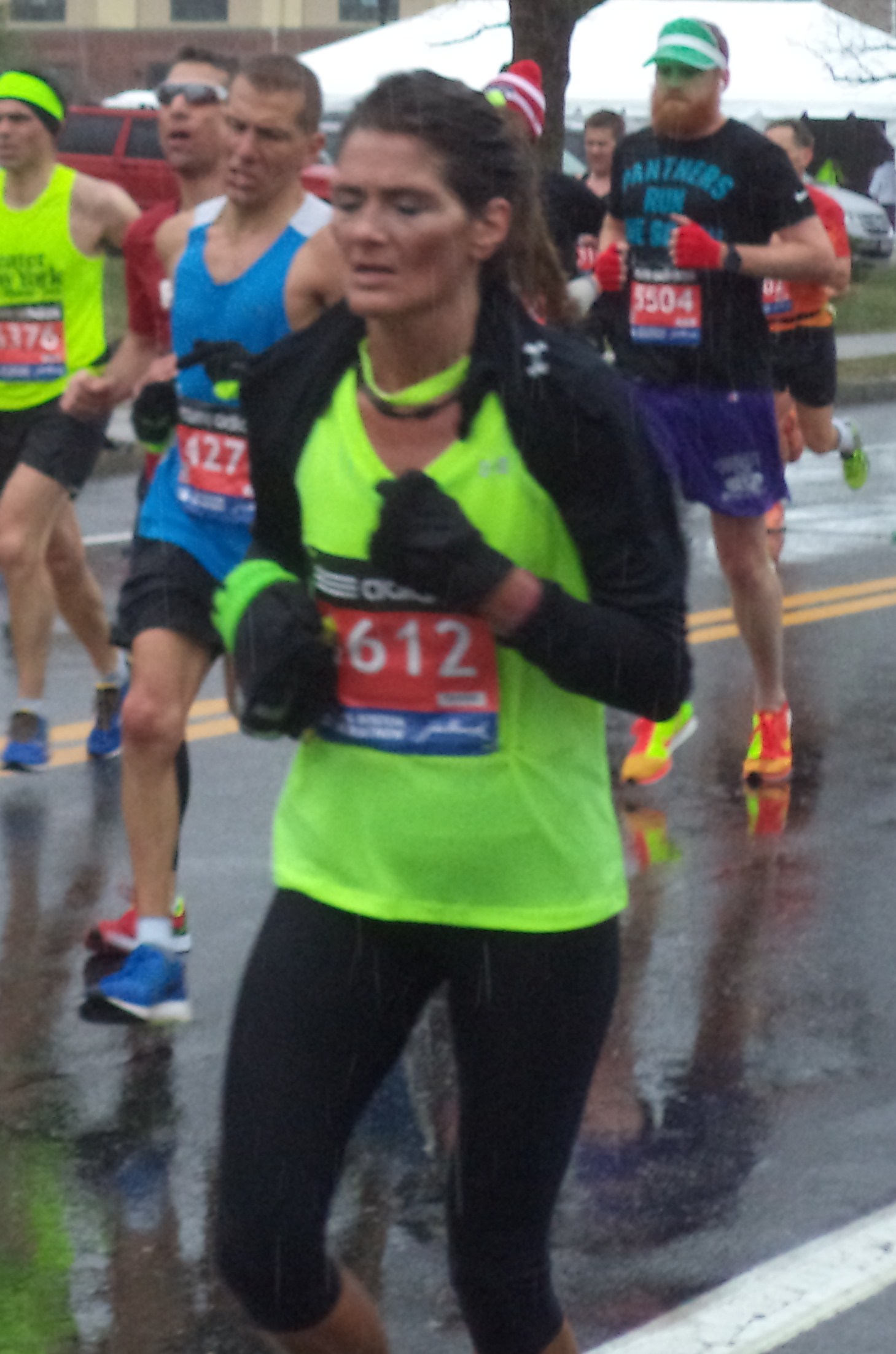
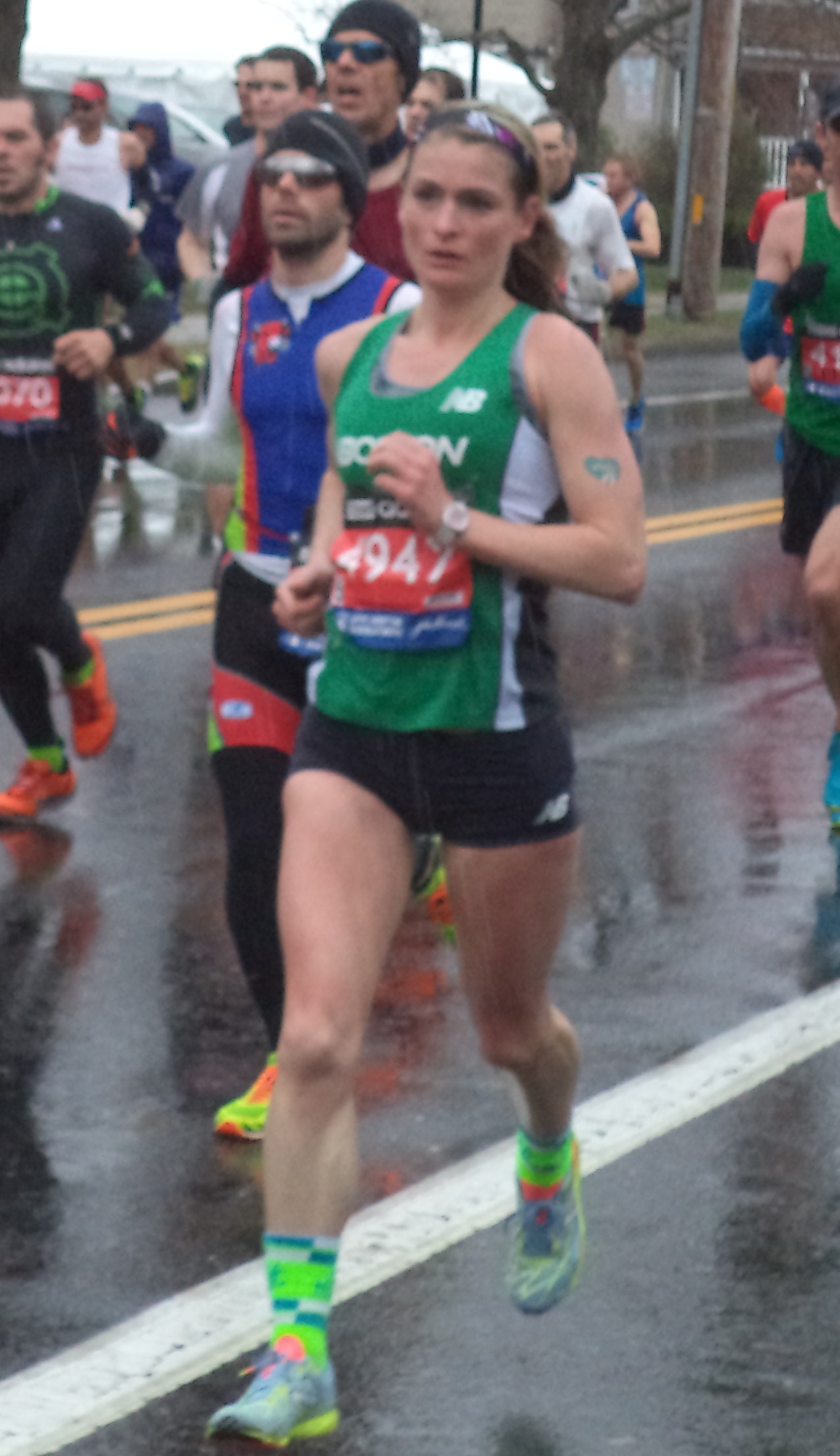
On Patriot’s Day each year, eastern Massachusetts reinvents itself with the Boston Marathon. Over half a million visitors in 2015 are expected to generate $181 million for the greater Boston economy, according to the Boston Athletic Association.  Starting in Hopkinton, running through six cities and towns, and ending on Boylston Street in Boston, the Boston Marathon is open to runners 18 or older from any nation, but they must meet certain qualifying standards.  006For example, prospective runners  aged 18–34 must run a time of no more than 3 hours and 5 minutes if male, or 3 hours and 35 minutes in the same age range if female,  Qualifying times are not the only areas in which males and females differ at the Boston Marathon.  Elite male and female runners have different start times, with Elite females beginning about 30 minutes prior to the Elite males.

Which female runners make the most news?

And the news stories about male and female runners differ significantly, even though 46% of the 2015 field is female. elite womenThe top 2015 story about Boston Marathon female runners wasn’t even about someone who actually ran the race; in fact, it was Kendall Schler who made the news.  Schler, who was initially reported to be first woman to cross the finish line at the GO! St. Louis Marathon, which would have made her eligible for the Boston Marathon, was disqualified.  According to the St. Louis Post-Dispatch,  officials said that Schler did not register any times on the route and marathon photos failed to turn up images of her on the course.

The Schler debacle, of course, rejuvenates the collective memory of another marathoner, Rosie Ruiz, who famously used public transit system to augment her run but was exposed as a fraud after she crossed the 1980 Boston Marathon finish line first. And the Boston Globe has reported that this year’s Boston Marathon will not include the 2014 defending female champion Rita Jeptoo, as the Kenyan is serving a two-year suspension for doping,

Caroline Rotich (KEN) and Mare Dibaba (ETH) sprint to the finish during the 2015 Boston Marathon. (Photo: Greg M. Cooper-USA TODAY Sports)

The Good News about the Female Runners

So, are there positive stories about female runners that the press might focus on as they cover the 2015 Boston Marathon?  Sure, this field of female athletes is the strongest ever to run the Marathon.   We’d like to know more about the Kenyan winner, Caroline Rotich, and Ethiopians Mare Dibaba and Buzunesh Deba, who brought the fastest female runner times to Boston. We could chronicle the strong American female contender, American Desiree Davila Linden, or remember Lisa Larsen Rainsberger, who took the female title in 1985. And it goes without saying that we must continue to honor Kathy Switzer, whose attempt to run in the 1967 Boston Marathon under a gender-neutral name caused then-Boston Athletic Association director Will Cloney to argue that “we have no space in the Marathon for any unauthorized person… If that girl were my daughter, I would spank her.”  By 1972, females were allowed to register for the Boston Marathon, and progress for women’s rights in sport has continued.

A Few Steps Forward with a Couple of Steps Back

But to what degree has progress been made?  We might turn to one of the top 2015 stories about females and the Boston Marathon: The Best Manicures at the Boston Marathon.  To accentuate the status of elite female athletes, we all must speak vociferously about their accomplishments at the Boston Marathon and elsewhere.

solo female 1solo female 3solo female 4solo female 2